
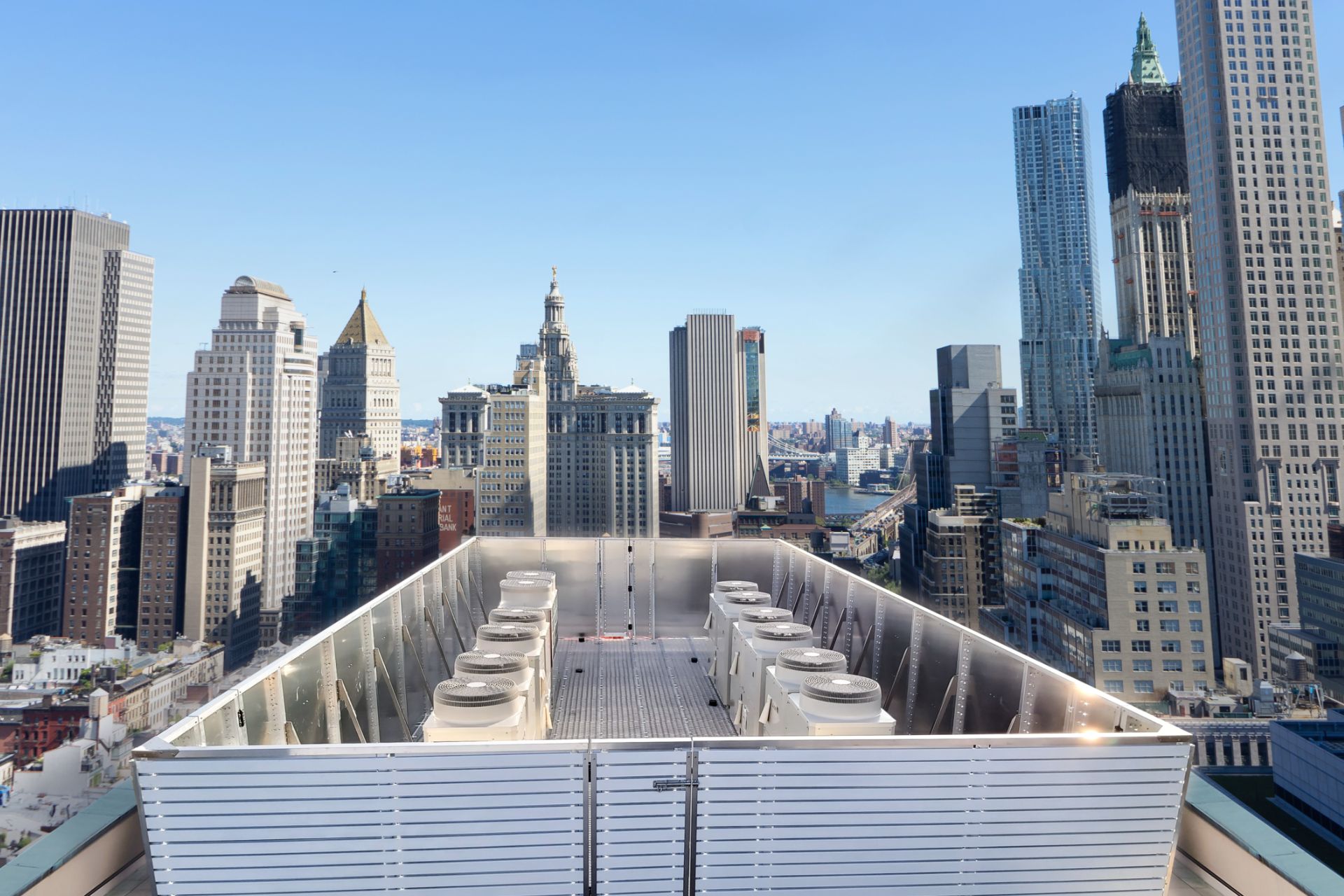
Mixed-use development is now the default in UK urban planning. Residential above commercial. Apartments above restaurants. Living spaces above retail units with extensive mechanical ventilation. The planning system actively encourages it, and the construction market is delivering it at scale, increasing the importance of noise control mixed-use developments.
But every mixed-use building with commercial activity on the lower floors needs mechanical plant on the roof. And every resident living on the upper floors is a noise-sensitive receptor within metres of that equipment.
This proximity creates an acoustic challenge that is fundamentally different from a standalone commercial building. The margin for error is smaller. The consequences of getting it wrong are more immediate. And the regulatory scrutiny is more intense.
Why Is Mixed-Use Different?
On a standalone commercial building, the nearest noise-sensitive receptor might be a residential property 30 or 50 metres away. Sound attenuates with distance, and the separation provides a natural buffer.
In a mixed-use development, the receptor is often directly below the plant, separated by one or two floors of structure. The separation distance might be 5 to 10 metres vertically. At this range, even moderate plant noise can produce a rating level significantly above the background at the receptor window.
There are several factors that make mixed-use acoustic design more demanding.
- Proximity. Short separation distances mean less natural attenuation. The acoustic screening has to do more of the work.
- Night-time operation. Commercial HVAC systems often run 24 hours. Night-time background levels are lower, and the BS 4142 assessment period is just 15 minutes, making the standard harder to meet.
- Multiple receptors. Upper-floor apartments may have windows, balconies, and roof terraces on multiple elevations, creating receptors in every direction from the plant.
- Structure-borne noise. In addition to airborne noise, vibration from plant equipment can transmit through the building structure and into residential floors above and below. Acoustic screening addresses airborne noise, but vibration isolation must also be considered.
- Resident expectations. People buying or renting apartments in a mixed-use building expect a quiet living environment. Noise complaints can lead to enforcement action, retrofitting costs, and reputational damage for the developer.
What Does the Planning Authority Expect?
For mixed-use developments, local planning authorities typically impose strict noise conditions as part of the planning consent. These conditions commonly require the following.
- A BS 4142 assessment demonstrating that the plant rating level does not exceed the background sound level at any residential receptor.
- Submission of an acoustic design report detailing the proposed mitigation measures before work commences.
- Post-completion verification testing to confirm that the installed plant meets the required noise limits.
- Ongoing compliance, with the developer liable for any future changes to the plant that alter the noise output.
Some authorities go further, requiring the plant noise to be 5dB or even 10dB below the background. In these cases, the acoustic screening specification must deliver a correspondingly higher level of attenuation.
Key risk. If the post-completion verification test fails, the developer faces a choice between retrofitting additional acoustic treatment (expensive and disruptive) or restricting plant operation (which may affect tenant obligations). Neither outcome is acceptable. Getting the specification right before construction is the only reliable approach.
Designing the Acoustic Enclosure for Mixed-Use
The acoustic enclosure design for a mixed-use development needs to account for receptors on all sides, not just the nearest one. This typically means higher-performance acoustic panels on every elevation, with acoustic louvres only where ventilation is essential.
Elevation-by-Elevation Specification
Each elevation of the enclosure should be designed based on the specific receptor in that direction. In a mixed-use context, this often means the following.
- Elevations facing residential windows or balconies. Acoustic+ (Rw 33dB, NRC 1.0) for maximum combined attenuation through absorption and reflection.
- Ventilation elevations. Peaceflow acoustic louvres, positioned on the elevation furthest from residential receptors where possible, or facing into a service area or away from habitable rooms.
- Internal treatment. Baffles inside the enclosure to reduce reflected noise that could otherwise amplify within the structure and escape through louvre openings.
- Roof level. For apartments or terraces above the plant floor, acoustic treatment to the top of the enclosure is critical. Sound radiating upward is often overlooked but can be the dominant path to upper-floor receptors.
Structural Considerations
Mixed-use buildings often have constrained roof structures. The commercial podium roof may not have been designed to carry heavy steel acoustic enclosures. Lightweight pre-engineered systems (from 7.25 kg/m²) can often be accommodated without structural modifications, avoiding costly supplementary steelwork and the programme delays that come with it.
Surface-mounted, penetration-less installation is also important. Penetrating the roof membrane on a mixed-use building creates a waterproofing risk directly above occupied residential or commercial space.
Getting Ahead of the Problem
The most common mistake in mixed-use acoustic design is treating the enclosure as an afterthought. The plant layout is finalised, the structural design is complete, and the acoustic screening is then squeezed into whatever space and budget remains. This approach often leads to retrofitting additional acoustic treatment after practical completion, at far greater expense.
The better approach is to involve the acoustic consultant and the enclosure manufacturer early. Before the plant layout is locked. Before the structural design is finalised. Before the planning conditions are discharged.
Early engagement allows the acoustic design to influence plant positioning (moving equipment away from the most sensitive receptors), structural allowances (designing the roof to accommodate the enclosure load), and programme planning (allowing sufficient lead time for design, manufacture, and installation).
Configured Platforms works with specifiers and acoustic consultants at the early design stage to optimise the enclosure specification for mixed-use projects. Our design team can model the right combination of products for every elevation, ensuring compliance with the most stringent planning conditions.
Working on a mixed-use project with rooftop plant? Contact us today or check out our recent projects and the systems we have to offer.