
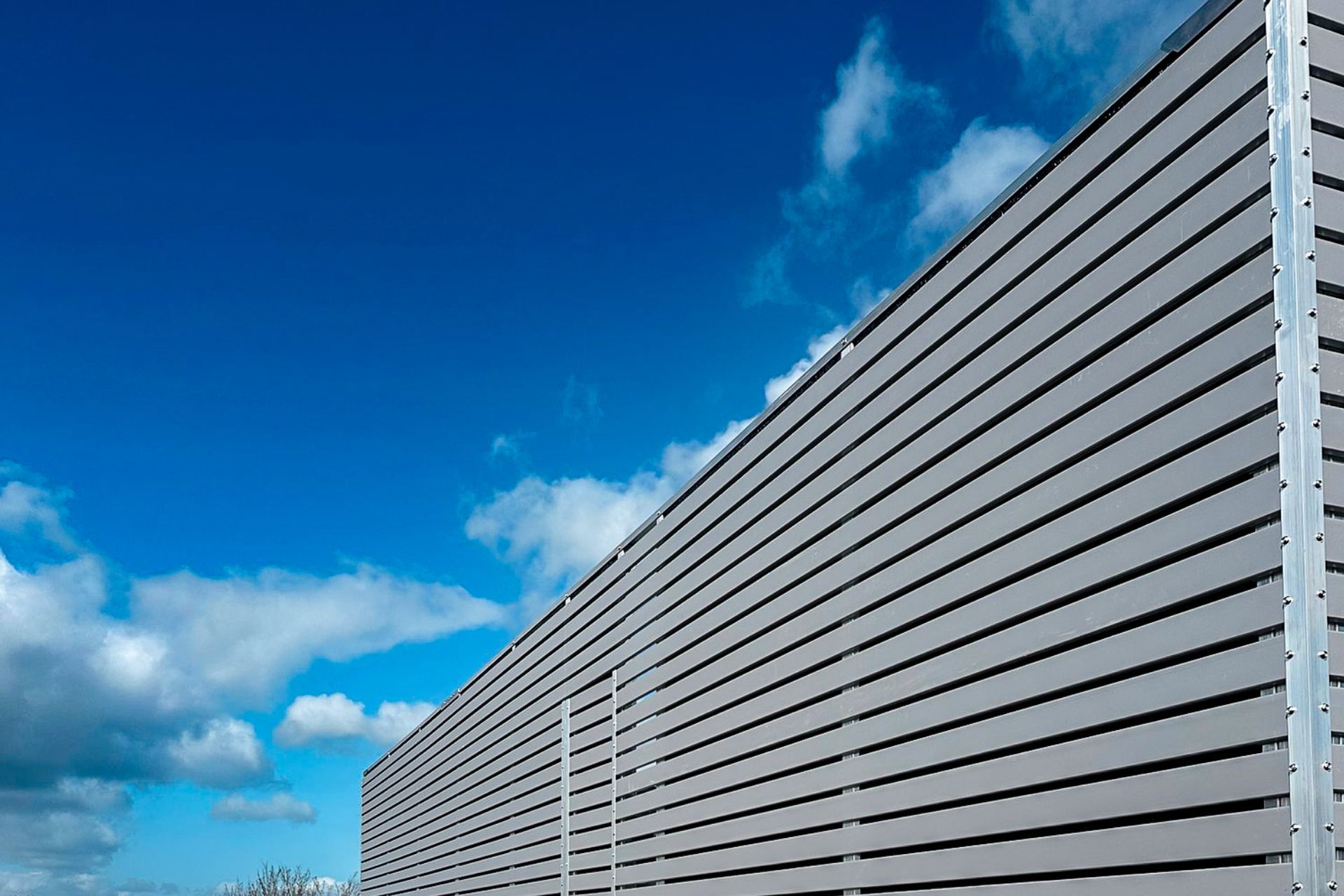
Rooftop acoustic screening is typically one of the last items specified and one of the last installed. It sits at the end of the programme, dependent on finalised plant layouts, completed structural work, and available cranage. When it runs late, it delays practical completion.
Traditional bespoke steel acoustic enclosures compound this problem. They require extended design periods, heavyweight fabrication, significant crane lifts, and skilled steelwork crews on the roof. Every stage introduces programme risk.
Prefabricated acoustic screening takes a fundamentally different approach.
What Is the Problem with Traditional Acoustic Enclosures?
Conventional steel acoustic screening follows a sequential process that is difficult to accelerate.
- Design. Bespoke steelwork requires individual structural calculations, connection details, and fabrication drawings. This process typically takes several weeks and involves coordination between the acoustic consultant, structural engineer, and steelwork fabricator.
- Fabrication. Heavy-gauge steel sections are cut, welded, and finished in the fabrication shop. Lead times vary but commonly run to 8 to 12 weeks from approved drawings.
- Delivery and craneage. Steel enclosure components are heavy. Getting them onto the roof requires significant crane capacity, careful lift planning, and coordination with other trades. On congested sites, crane access can be the single biggest constraint.
- Installation. Structural steel connections need skilled labour, often involving bolted or welded connections to primary steelwork. The roof structure must be designed to carry the additional load, which can require supplementary steel or concrete pads.
Each stage is a potential delay. A design revision resets the fabrication clock. A crane booking conflict pushes installation back. A structural query adds weeks to an already compressed programme.
How Prefabricated Systems Change This
Pre-engineered modular acoustic screening is designed, manufactured, and delivered as a complete kit of components that bolt together on site without welding, without heavy cranage, and without structural modifications.
Lighter
The entire Configured Platforms acoustic product range is manufactured from aluminium with stainless steel fixings. The lightest system, Peacemaker, weighs just 7.25 kg/m². Even the heaviest, Peaceflow with its louvre profile, weighs 26 kg/m². By comparison, conventional steel acoustic enclosures typically weigh 60 to 100 kg/m² or more.
This weight reduction has cascading benefits. The roof structure carries less load, reducing or eliminating the need for supplementary steelwork. Lighter components mean smaller crane lifts, or in many cases, no crane at all. Manual handling becomes practical for individual panels.
Faster
Modular systems are designed from a library of pre-engineered components. There is no bespoke structural calculation for every connection. No individual fabrication drawings for every panel. The design process is configuration rather than creation, which compresses the design programme significantly.
Manufacturing follows a repeatable, factory-controlled process. Components arrive on site as a flat-pack kit with an installation manual, ready for assembly by on-site trades. No specialist steelwork crew required.
Programme advantage. A pre-engineered acoustic enclosure can move from confirmed layout to installed and complete in a fraction of the time required for traditional bespoke steelwork. This compresses the critical path and gives the programme buffer where it is needed most, at the end.
Smarter
Because every component in the range is designed to integrate within the same framing system, the acoustic specification can be configured to match the exact requirements of each elevation. Soundshield on one face, Peaceflow louvres on another, Acoustic+ where maximum attenuation is needed. All within the same enclosure structure.
This modularity also means the system is upgradeable. If an additional plant is added to the roof in the future and the acoustic requirement changes, individual panels can be swapped or upgraded without dismantling the entire enclosure.
What This Means for Structural Loading
The weight difference between aluminium and steel acoustic systems is not trivial. On a typical rooftop installation, the structural loading from the acoustic enclosure can be the deciding factor in whether the existing roof structure is adequate or whether supplementary steelwork is required.
Supplementary steelwork is expensive. It adds cost directly (material, fabrication, installation) and indirectly (additional design coordination, extended programme, additional cranage). Eliminating the need for it by specifying a lighter system removes these hidden costs and keeps the programme on track.
At Configured Platforms, our systems are surface-mounted using a penetration-less, load-sharing design. No bolting through the roof membrane. No waterproofing risk. The system sits on the roof surface and distributes its load evenly.
What This Means for Your Programme
Acoustic screening sits on the critical path to practical completion. It cannot be installed until the plant is in position, the roof is weathertight, and the enclosure structure is ready. Any delay in these preceding activities compresses the time available for acoustic screening.
A prefabricated system gives you a buffer. Faster design, shorter manufacturing lead times, simpler installation, and no dependency on specialist trades or heavy cranage. When the programme is under pressure, this is the difference between completing on time and overrunning.
Configured Platforms has delivered over 12,000 projects worldwide. Our pre-engineered approach is designed specifically to remove programme risk from rooftop plant installations.
Need acoustic screening that fits your programme, not the other way round?
Contact us today or check out our recent projects and the systems we have to offer.