
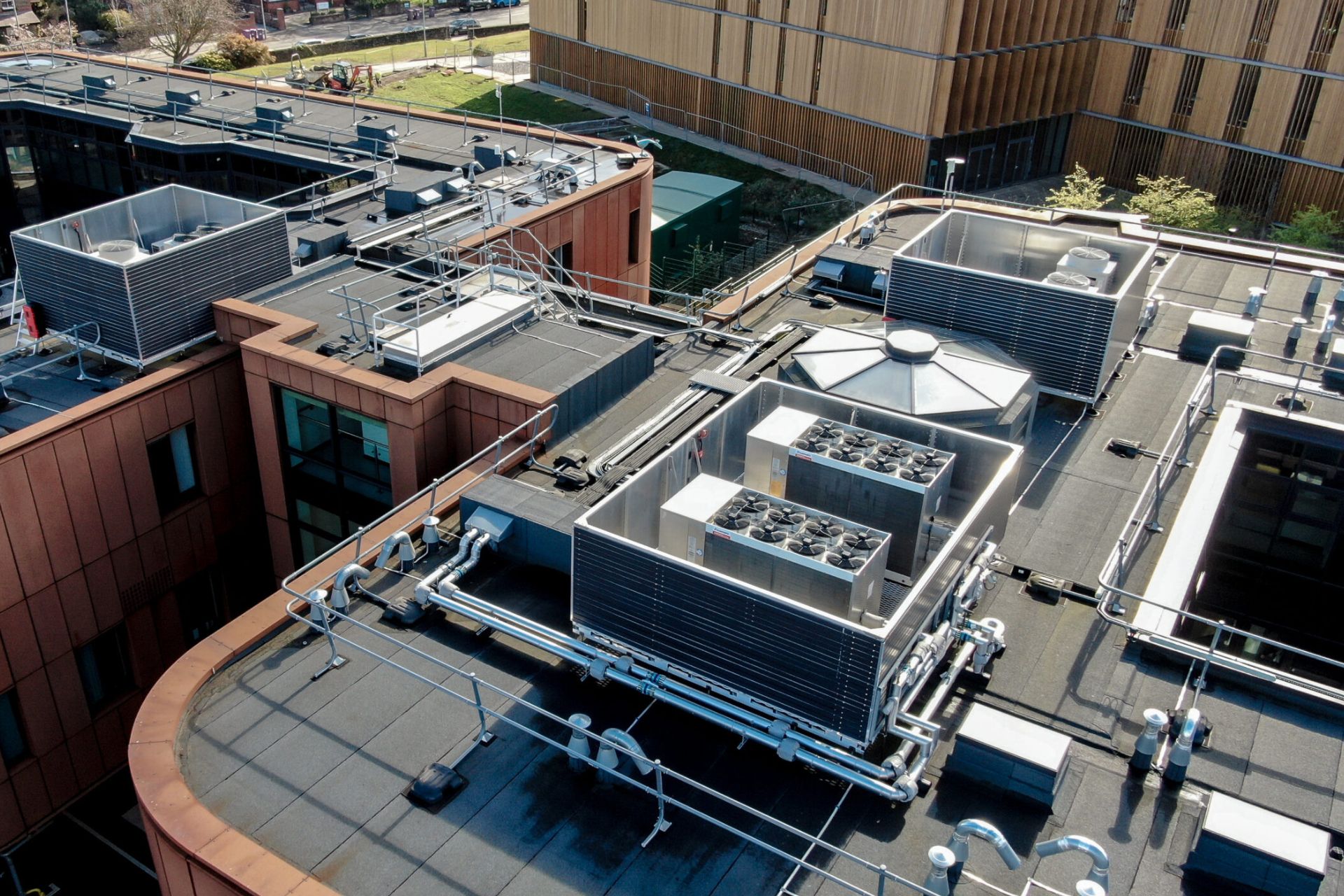
Rooftop acoustic screening rarely gets the attention it deserves during the design phase. It is treated as a commodity item, specified late, value-engineered aggressively, and installed at the end of the programme with minimal margin for error.
When it works, nobody notices. When it fails, the consequences turn into immediate, expensive, and difficult-to-reverse rooftop acoustic costs.
The Five Costs Nobody Budgets For
Why This Keeps Happening
The root cause is almost always the same. Acoustic screening is specified too late and by the wrong people.
In many projects, the acoustic enclosure specification is left to the M&E subcontractor, who treats it as an accessory to the plant installation rather than a critical building element in its own right. The acoustic consultant produces the noise assessment and specifies the required attenuation, but the translation from acoustic requirement to enclosure specification falls into a gap between disciplines.
The M&E package often includes a line item for “acoustic screening by others” or “support by others” that nobody owns until the end of the programme. By that point, the budget is under pressure, the programme is compressed, and the cheapest available solution is specified regardless of whether it meets the acoustic requirement.
The fix is simple.
Engage the acoustic enclosure manufacturer at the same stage you appoint the acoustic consultant. A pre-engineered system can be specified, designed, and costed early, giving the project team certainty on performance, cost, structural loading, and programme before the critical path becomes immovable.
What the Right Approach Looks Like
Projects that avoid these hidden costs share a common approach.
- Early engagement. The acoustic enclosure is considered at RIBA Stage 3, not Stage 5. The manufacturer reviews the preliminary plant layout and provides indicative specifications, weights, and lead times before the structural design is finalised.
- Collaborative specification. The acoustic consultant, M&E engineer, structural engineer, and enclosure manufacturer coordinate to ensure the specification meets the acoustic requirement within the structural and programme constraints.
- Performance with margin. The specification includes headroom above the minimum BS 4142 requirement, accounting for the inevitable differences between predicted and measured performance, and allowing for future plant additions.
- Modular, upgradeable systems. Pre-engineered modular systems that can be reconfigured or upgraded if the acoustic requirement changes, without replacing the entire enclosure.
Configured Platforms has delivered over 12,000 projects worldwide. Our pre-engineered approach is specifically designed to eliminate the hidden costs that come from late specification, heavyweight construction, and inflexible acoustic solutions.
Avoid the hidden rooftop acoustics costs. Engage early and specify with confidence.
Contact us today or check out our recent projects and the systems we have to offer.